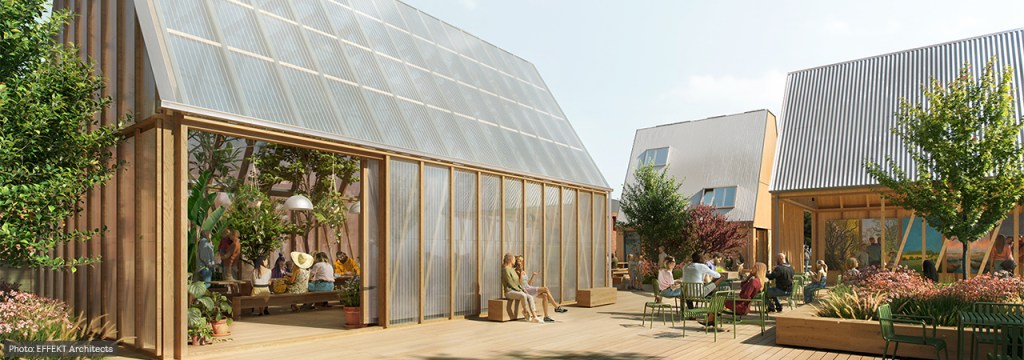
Living Places is a Danish concept similar to the Living Buildings project I spoke about last week but for housing. Check out their video: https://youtu.be/QuOHasMZTvA?si=wxzaCHKZZeL09CH_ It’s such a wonderful concept! I would love to find a neighborhood like this in a village that is walkable and bike friendly. Denmark definitely has a beautiful climate, walkable neighborhoods, and bike friendly cities. I see why they keep ranking as happiest people on earth. The Living Places project has “3-times lower CO2 footprint and a 3-times better indoor climate by Danish standards, all while enhancing the health and well-being of residents – and at a competitive price!” (Velux.com) That last part is pretty important because most of the Living Building examples I’ve found are in the millions and we are never going to combat climate change if we don’t make changes for the majority of people. Also these structures are supposed to be able to be taken apart and reused in the future – recycling the house!
Compare that to one of the older Living Building projects, built in 2013, called the Bullitt Center (https://bullittcenter.org) in Seattle Washington. They say that the building was the first of its kind, a totally self-reliant Living Building that is supposed to last 250 years. At the cost of $32.5 million dollars, including land, the 52,000 square foot living building has proven net-zero architecture is possible – although still not commonplace and therefore, extremely expensive. The cost of maintenance for all the water and waste filters and engineering could be financially prohibitive, as well. Find the project at a glance here: https://bullittcenter.org/wp-content/uploads/2015/03/Bullitt-Center-Financial-Case-Study-FINAL.pdf). As a matter of fact, it took them over 2 years to find all the products they needed in order to not have any Red List chemicals in them (https://gba.org/resources/green-building-methods/interior-solutions/product-and-building-materials-red-list/). Although they did end up having to use chlorine in the water to reduce the chance of bacteria buildup in the pipes.
I love that the structure was to micmic the forest that was there before the city – using the sun and water to sustain itself and still replenish the land. They used local timber for the stairs and ceiling, large windows for natural light and breezes, and even man-made wetlands along the edge of the upper level of the building and on the ground around the building to recycle the grey water produced. They also only provide bicycle parking, rather than cars, to promote gas free transportation.
Nevertheless, it didn’t exactly scream nature. Although an excellent example of a Living Building, if someone didn’t tell me that this was a Living Building, I’m not sure I would have taken notice of it in the cityscape but it is amazing in what it accomplishes. It collects all it’s own water, produces an extra 30% of energy from it’s solar panels annually, and the toilets produce what they call, black water which is recycled locally to produce compost which is then sold.
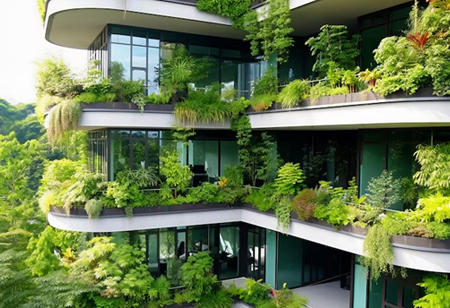
Though I still crave a bit more natural elements. The BBC article, “12 Stunning Buildings That Bring Nature Inside” (April 20, 2024) had several examples of that. See the article with pictures here: (https://www.bbc.com/culture/article/20240420-12-stunning-buildings-that-bring-nature-inside ). These may or may not be Living Buildings but they definitely exemplify biophilic design. There are a couple of buildings from Ho Chi Minh City that look like verticals gardens. They talk about how the structures cool the air and create vertical food production and even a microclimate! Crazy!
They show the, Shiroiya Hotel in Japan which is designed to be an open garden with plants and natural light coming into what used to be a regular building (https://www.shiroiya.com/en/ ). Then the exterior looks like it’s coming out of a hillside, which they created. That section is called The Green Tower and looks like a green hill with paths, windows, and doors sticking out of it, in the middle of the city. They hope that this will draw people in from around the city to enjoy nature and calm the mind.
There is also the CapitaSpring tower in Singapore with an urban farm on the top and gardens throughout the building (https://capitaspringoffice.com ). Parts of the building look like the building is opening up and plants are coming out of it. You can see a tour of the garden here: https://youtu.be/r9OJSHnRWq0?si=fgsa974re9Edygw9
It’s all so exciting, how many amazing projects are going on all around the world. It’s great to see what can be done and is being done to Combat Climate Change by changing the way we think about our surroundings. Please feel free to share any great projects that you find!
 ResearchMoore