Last week, we discussed Japanese Forest Bathing, called Shinrin-yoku, described in Florence Williams’ book “The Nature Fix: Why Nature Makes Us Happier, Healthier, and More Creative” (2017). Well, she goes on to talk about how South Korea is trying to achieve the same thing as Japan. They call it salim yok. Having learned from Japan’s findings and conducting their own research, the Korean Forest Agency is collecting data and comparing results between healing forests. At the time she visited them, there were three healing forests and 65 more in the works. They cite research that the forests, including the soil, lower blood pressure, reduce stress, have antiviral qualities, and anti-carcinogenic qualities.
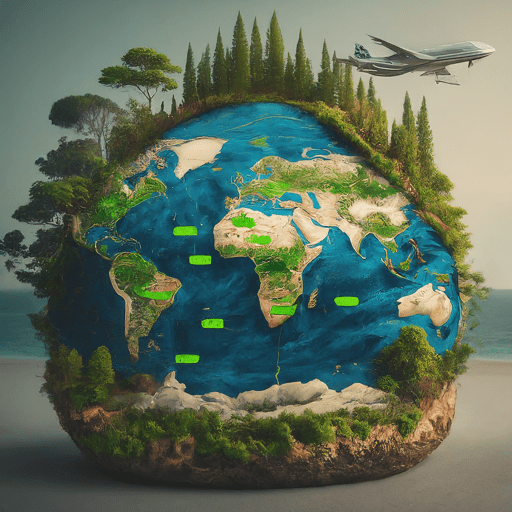
This brings me to the concept of ecotourism. By using our free time and money to support those countries which are trying to preserve their environment and to educate others on the importance of combating climate change in whatever small ways we can.
To see a nice guide to Forest Bathing in South Korea, check out Culture Trip. It’s a wonderful site that breaks down the features of each of their forests, now many more than three. What you’ll also find is the amazing development of biodiversity. When Williams (2017) wrote about Korea’s new undertaking, she discussed the lack of biodiversity in some forests and how the most diverse area was the Demilitarized Zone between South and North Korea. But now, it appears they have made biodiversity a focus and done an incredible job! Here is an excerpt from the CultureTrip.com site:
Seoul Grand Park (서울대공원)
Nestled in the natural forest of Cheonggyesan Mountain, Seoul Zoo’s Forest Bathing Park boasts some 470 species of vegetation, including pine trees, wild pear trees, Mongolian oak trees and ginger plants as well as raccoons, rabbits, owls and pheasants. It is made up of four courses, and each offers a variety of themed walking paths, which can take anywhere from one to three hours to complete. One course includes a walkway in which forest bathers can walk barefoot on the forest’s yellow soil, while taking in views of Gwanaksan Mountain and listening to the sounds of chirping insects. It doesn’t get more natural than that.
When thinking about how different countries are taking an interest in combating climate change, Sweden comes to mind. Sweden has always been presented as the place that does it right. Not just climate change initiative but everything. If you go to Visit Sweden site it states that, “Sweden was the second country in the world to introduce an eco tourism charter. The Swedish eco certificate Nature’s Best will guide you to the best eco tourism experiences and accommodations in our beautiful country.” (visitsweden.com) This is a beautiful site that I highly recommend you take a look at. Especially, if you are thinking about where to go on your next vacation.
So what’s that about Australia? Ecotourism Australia is a non-profit that supports ecotourism in Australia. They have a lovely website which contains a Green Guide to eco experiences and a map. They rate hotels on eco features. It’s a really nice place to start planning an eco trip. I also found Australia.com site which lists some of their favorite eco friendly destinations or Sustainable travel spots.
No matter your travel plans for summer or winter, vacation choices can be another way to combat climate change. Now don’t get me wrong – airplanes are NOT eco friendly and there are some serious videos on that from the BBC. There is a BBC report about Costa Rica’s amazing ecotourism but the reporter brings up the question of how all the visitors must arrive by plane and that planes are a terrible polluters (BBC video). Nevertheless, Costa Rica has done a wonderful job at preserving their forests, protecting the green sea turtle population, and educating their visitors. And if you would like to go, National Geographic has some wonderful travel guides about Costa Rica and some other eco-friendly destinations (nationalgeographiccosta-rica ).
As far as planes go, and let’s admit it, most of us are flying to our vacation destination whether we like it or not. According to Chemical and Engineering News, airplanes want to be more sustainable. (CEN). They apparently create “about 3% of global carbon dioxide emissions, and it is one of the fastest-growing sources of greenhouse gases, according to the International Council on Clean Transportation” (CEN). The International Council on Clean Transportation states that “Carbon emissions from commercial flight are set to triple by 2050 amid surging travel and freight demand. Nonetheless, emissions could be slashed by 85% through demand management, advances in efficiency technologies, and expanded use of biofuels. ICCT shows how to design pragmatic policies using research on aircraft technology, fuel efficiency, and alternative fuels.” (theICCT.org).
The airline industry is “committed to achieving net-zero carbon emissions by 2050” according to AFAR.com. Through the use of “sustainable aviation fuel—jet fuel produced from sustainable sources such as plant oils, municipal waste, and agricultural residue that generates up to 80 percent fewer carbon emissions than conventional fossil fuel–based jet fuel. The commitment is coupled with the goal of making 2 billion gallons of sustainable aviation fuel available to U.S. carriers by 2030”(afar.com). For more on sustainable aviation fuels, see the Environmental Energy and Study Institute’s (ESSI) site here and to for more on Airlines for America’s sustainability plans look here .
So, hope is on the horizon! And we can do our part to combat climate change by supporting those countries, governments, communities, airlines, and travel companies that are doing their part to combat climate change on our next vacation. We can research eco-friendly destinations, book flights with airlines committed to biofuels, and pack light to reduce airplane fuel consumption. Carbon offsetting and slow travel are also ways to minimize the environmental impact of travel while benefitting the environment and the local communities that you visit. Bon Voyage!
 ResearchMoore